The books, they do accumulate. Recent additions:
Actual books:
Howe, Daniel Walker (2007) What Hath God Wrought: The Transformation of America, 1815-1848. Oxford University Press. Bought to feed my obsession with the Finger Lakes area in the mid-nineteenth century (by going big picture). The title suggests a generalists approach, but the damn thing is over 900 pages. I've not read it cover-to-cover yet, but it's been super handy for dipping-in for references to obscure things like the establishment of the telegraph and the etymology of snail mail.
Sappol, Michael (2002) A Traffic of Dead Bodies: Anatomy and Embodied Social Identity in Nineteenth-Century America. Princeton University Press. Borrowed it twice from inter-library loan, finally had to get my own copy. Bioethics, revolutions in medicine, identity, anatomy, and popular fiction... all in here. If you're interested in what the living are doing in the nineteenth century, you should check out their relationships with the dead. Looking forward to reading it again (and having it handy when I need to cite it...)
Saitta, Dean (2007) The Archaeology of Collective Action. University Press of Florida. According to the book cover, it includes archaeology of protests, labor strikes, and slave uprisings. Looking forward to reading it.
Voss, Barbara L. and Eleanor Conlin Casella (2012) The Archaeology of Colonialism: Intimate Encounters and Sexual Effects. Cambridge University Press. This will probably be the first of this batch that I read; I find both Voss' and Casella's work fascinating. Lots of new things to read about in this edited volume that offers exactly what the title describes.
Kindle Accumulations:
The Hunger Games series. I liked it. Haven't seen the movie, but liked the books.
One of Robyn Hobb's Liveship Traders series (can't recall which off the top of my head).
Yep, I read fantasy/sci-fi when not reading archaeology. Don't judge.
Showing posts with label Libraries/Archives. Show all posts
Showing posts with label Libraries/Archives. Show all posts
Friday, June 8, 2012

Sunday, January 3, 2010
Musing on Paper Archives
I've often argued that microfilm is better for long-term preservation than digital. Sure, they're not searchable (though I have no issues digitizing and searchabilifying microfilm), but the information is always available. If your digital file gets corrupted, or you forget to back it up, or forget to save it onto whatever the new storage media is, or the world ends*, your information is GONE. With microfilm, all you need is a magnifying glass and a light source to get at the information.
I do have to admit, however, that I wouldn't want to roast marshmallows over microfilm. If nothing else, this should be a good reason to keep paper libraries.
* I don't actually believe we are in the throes of the apocalypse, but you know, stuff happens.
I do have to admit, however, that I wouldn't want to roast marshmallows over microfilm. If nothing else, this should be a good reason to keep paper libraries.
* I don't actually believe we are in the throes of the apocalypse, but you know, stuff happens.
Sunday, August 23, 2009
Pedagogy and Working With Documents
I've been working on the book this morning (yay), and took some time out to mess around online while I switched gears (moving from checking sources to writing).
School starts soon, and I'm always interested in improving my teaching. I teach drive-by introductions to various subfields in anthropology; this semester it is physical anthropology. There is SO much to cover in one of these introductory courses, that I just can't. I want to give my students a tasting of all the various things you can do as a physical anthropologist, how it is relevant, how dynamic a field it is, a basic understanding of the processes of natural selection, the importance of biodiversity, and an overview of hominid evolution that ties together physical evolution and cultural development. Still an awfully tall order for 13 weeks of lectures. Yes, I could just yammer at them (and have... and will again, I'm sure), but I want them to think about and engage with the material. I want them to roll it around, compare it to their beliefs and experiences, play "what if," and ask questions - of themselves, their classmates, and me.
I'm always tweaking the course; modifying assignments, messing with lectures, etc. I don't want to emphasize style over substance, but would like my classes to be more engaged. As I was muddling about the 'net this morning, I found this: Secrets of Great History Teachers part of the History Matters: The US Survey Course on the Web. I've skimmed just a couple of the entries, but it looks like there are some good ideas in there, even for non-history teaching (though some have proposed that aren't all studies of the past history?; I will have more on that). I will have to pick out one or two to try.
Also part of the History Matters website is a section called Making Sense of Evidence, with tons of material on working with maps, diaries, letters, ads, speeches, newspapers, etc. I use primary documents all the time; good to get a refresher in approaching them (that, and I'm trying to incorporate more historiography into my historical archaeology).
School starts soon, and I'm always interested in improving my teaching. I teach drive-by introductions to various subfields in anthropology; this semester it is physical anthropology. There is SO much to cover in one of these introductory courses, that I just can't. I want to give my students a tasting of all the various things you can do as a physical anthropologist, how it is relevant, how dynamic a field it is, a basic understanding of the processes of natural selection, the importance of biodiversity, and an overview of hominid evolution that ties together physical evolution and cultural development. Still an awfully tall order for 13 weeks of lectures. Yes, I could just yammer at them (and have... and will again, I'm sure), but I want them to think about and engage with the material. I want them to roll it around, compare it to their beliefs and experiences, play "what if," and ask questions - of themselves, their classmates, and me.
I'm always tweaking the course; modifying assignments, messing with lectures, etc. I don't want to emphasize style over substance, but would like my classes to be more engaged. As I was muddling about the 'net this morning, I found this: Secrets of Great History Teachers part of the History Matters: The US Survey Course on the Web. I've skimmed just a couple of the entries, but it looks like there are some good ideas in there, even for non-history teaching (though some have proposed that aren't all studies of the past history?; I will have more on that). I will have to pick out one or two to try.
Also part of the History Matters website is a section called Making Sense of Evidence, with tons of material on working with maps, diaries, letters, ads, speeches, newspapers, etc. I use primary documents all the time; good to get a refresher in approaching them (that, and I'm trying to incorporate more historiography into my historical archaeology).
Friday, August 14, 2009
Home Again, and A Photo
Home again. The research trip was most excellent. Research appointment at Local History Museum #1 was threatening to not pan out terribly successfully, and suddenly became unscheduled research at Nearby Research Archive #2 that rocked. It involved access to boxes of barely-processed materials in my research area. With more than twice that much material again, part of the same collection, expected to arrive in the near future.The moral of the story is, tell ANYONE who will stand still long enough what you're researching. Even when it is something weird and obscure, and the most common response is, "What?" The curator at Museum #1 said, "I don't have that much stuff, but let me make a call." Thirty minutes later, I'm in Nearby Research Archive #2.
As promised, I toted my camera around. But National Research Archives #1 (visited the day before the above adventures) had so much material, that I used up my photo card. I remembered to bring fresh batteries, but never anticipated I'd take more than 120 images. Silly me. I'll have to toss an extra photo card into my camera bag. It's little, holds maybe 30 images, but it would have tided me over!

I did, however, save a shot for a photo to share. This is Taughannock Falls (as best I can tell, pronounced Te-GA-nick, with the emphasis on A as in can), near the southern end of Cayuga Lake in the Finger Lakes Region of New York, just north of Ithaca. It is 215 feet, higher than Niagara Falls by 30-40 feet or more. The photo does it no justice -- it is just impossible to capture the scale of it. I didn't make it this time, but there is a trail you can walk to the bottom of the falls, which is spectacular as well.
As promised, I toted my camera around. But National Research Archives #1 (visited the day before the above adventures) had so much material, that I used up my photo card. I remembered to bring fresh batteries, but never anticipated I'd take more than 120 images. Silly me. I'll have to toss an extra photo card into my camera bag. It's little, holds maybe 30 images, but it would have tided me over!

I did, however, save a shot for a photo to share. This is Taughannock Falls (as best I can tell, pronounced Te-GA-nick, with the emphasis on A as in can), near the southern end of Cayuga Lake in the Finger Lakes Region of New York, just north of Ithaca. It is 215 feet, higher than Niagara Falls by 30-40 feet or more. The photo does it no justice -- it is just impossible to capture the scale of it. I didn't make it this time, but there is a trail you can walk to the bottom of the falls, which is spectacular as well.
Sunday, July 26, 2009
15th Century Vinland Map of North America Authenticated

From a story over at the Globe and Mail: Researchers at the School of Conservation, part of the Royal Danish Academy of Fine Arts have studied the circa 1440 map for five years. Their conclusion? The map is almost certainly authentic, "All the tests that we have done over the past five years – on the materials and other aspects – do not show any signs of forgery" (Rene Larsen, Rector of the School of Conservation). The map shows Vinlanda Insula (way to the left, in the upper corner), the Vinland of Icelandic scholars (click here for a larger version). This area is now linked to Newfoundland and Labrador, where there is extensive archaeological evidence of Norse settlement dating to AD 1000 at L'Anse aux Meadows. The L'Anse aux Meadows site is a National Historic Site in Canada, as well as a UNESCO World Heritage Site (sorry for the link to Wikipedia; the Parks Canada website for L'Anse aux Meadows is being fussy).

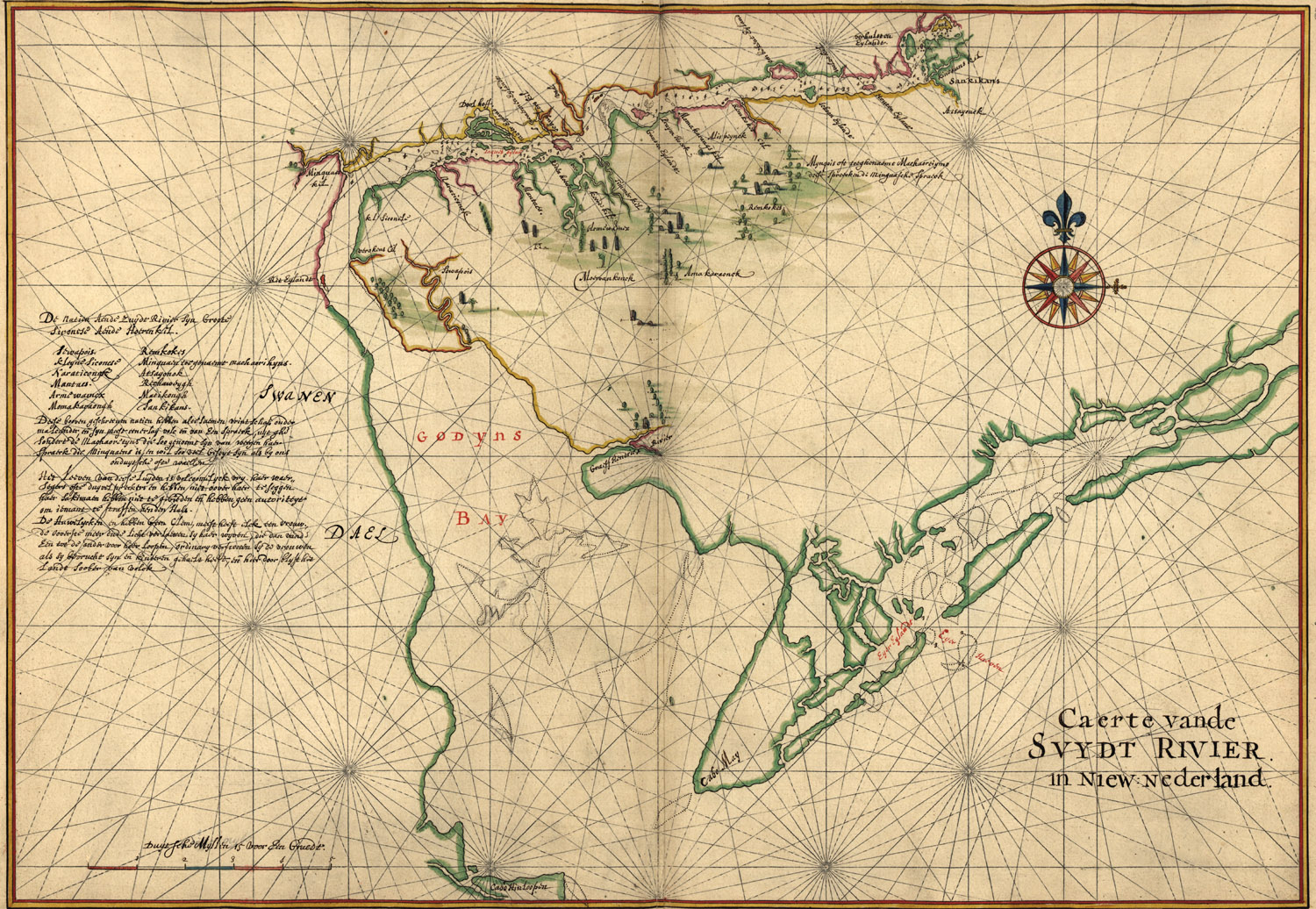
I enjoy working with historic maps, tracing the history of an area back through time. Actually, I usually trace the history forward through time. I should try writing it the other way sometime; see what that does. Anyway... the maps. More recent maps are great for me as an archaeologist, because they tend to be more accurate (not completely accurate, mind you). Using these maps, I can address very specific locations of archaeological sensitivity or areas that have been disturbed to the point that no archaeological resources are likely to remain intact. Very practical!
But I really love working with the earlier maps. The ones with pictures of whales in the water; the ones that look more like landscape paintings than maps; the ones with coastlines that make sense if you're drawing them from a boat as you pass and are helpful for other mariners, but don't seem to make a lick of sense in any other context. Despite my "Here be Dragons" romanticism, these maps also often contain good information about the relationships of things and people. To interpret these, I have to look at landmarks, and think about things that were important enough to record. Here's one of my favorites of the Delaware River, "Caert vande Svydt Rivier in Niew Nederland" by Joan Vinkeboons c. 1639 (you can see it larger here):

Thursday, May 28, 2009
What Kids Are Reading These Days
I'm working on some course prep / book research / Inter-Library Loan requests and was caught entirely by surprise (click for contents):
Those sure look like official Library of Congress Subject Headings to me. Wow.
On a related tangent, WorldCat at www.worldcat.org is wonderful. Think world-wide union (as in, all in one place) library catalog.
Perfect for those times when you forgot to copy down the entire citation of something obscure.
WorldCat also provides information on the nearest repository for what you are looking for AND tell you how far away it is. It also pulls prices from several online retailers, if the book is available, so you can easily see if you should just buy the dang thing or OMG request it through Inter Library Loan (ILL).
But it's ok, because WorldCat gives you all the information you need to do an Inter-Library Loan Request, including the OCLC (Online Computer Library Center) number, by which ILL finds and tracks publications. Providing this info with your ILL request makes ILLibrarians happy.
Those sure look like official Library of Congress Subject Headings to me. Wow.
On a related tangent, WorldCat at www.worldcat.org is wonderful. Think world-wide union (as in, all in one place) library catalog.
Perfect for those times when you forgot to copy down the entire citation of something obscure.
WorldCat also provides information on the nearest repository for what you are looking for AND tell you how far away it is. It also pulls prices from several online retailers, if the book is available, so you can easily see if you should just buy the dang thing or OMG request it through Inter Library Loan (ILL).
But it's ok, because WorldCat gives you all the information you need to do an Inter-Library Loan Request, including the OCLC (Online Computer Library Center) number, by which ILL finds and tracks publications. Providing this info with your ILL request makes ILLibrarians happy.
Subscribe to:
Posts (Atom)