Showing posts with label Fieldwork. Show all posts

Thursday, June 21, 2012

Upstate

I'm on an archives adventure. Some more photos and travelogue from here:

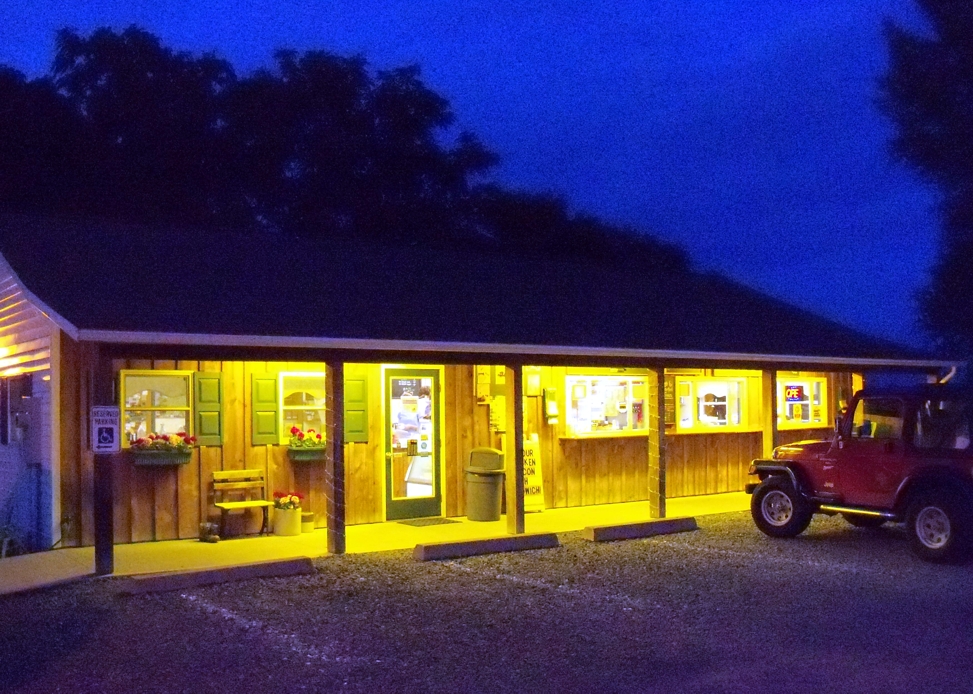
Cayuga Lake Creamery, Route 89 Interlaken, New York, June 16, 2012
If you're in the Finger Lakes region of New York (especially the west side of Cayuga Lake), don't bother visiting any other ice cream place. Cayuga Lake Creamery is where its at. They make all their own ice cream (I'm a fan of the maple walnut, sea salt caramel, and butter pecan). They also make fantabulous wine sorbet with local wines. Sounds weird, I know... but it's yum. Extra awesome: you can mail order their ice cream.* Not just around for the tourists, CLC always has locals stopping by and they stay open throughout the winter (reduced hours, natch).
 

Roller derby admission. Ithaca League of Women Rollers, Cass Park, Ithaca, New York. June 16, 2012

Waiting for the derby. Ithaca League of Women Rollers, Ithaca Bluestockings vs. Capital City Derby Dolls (Ottawa, Ontario), Cass Park, Ithaca, New York, June 16, 2012

I have wanted to go to the roller derby in Ithaca since I found out they had a team called the Ithaca SufferJets. How perfect for a team out of the cradle of the women's rights movement. Since then, the Ithaca League of Women Rollers has spawned a second team, the Ithaca Bluestockings. Finally went... Ithaca Blusetockings vs. the Capital City Derby Dolls from Ottawa, Great White North and Homeland. It was very loud and very fun. Great community support synergy, with the community supporting ILWR and ILWR supporting the Ithaca community.  Dinner in Ithaca was at Moosewood. I don't have a pic of my dinner to post; it was too yummy (salmon with mango sauce). I did try a new brewery, though... Bacchus Brewery, in Dryden, New York. Had their Blonde Ale... good stuff. I wish them well... there is always room for good beer in this world.

Wesleyan Chapel, Womens Rights National Historical Park, Seneca Falls, New York, June 17, 2012
Can't go to the Finger Lakes and not stop at Women's Rights National Historical Park in Seneca Falls. There are plans afoot (and tape on the floor) to do some work on the inside to re-create what little is known of the interior architecture. I'll be interested to see what it looks like; right now, the positions of the altar, vestibule wall, and pews are taped out on the floor.

Emily's direct route to the Adirondacks. June 17, 2012
Emily is my GPS. Actually, more specifically, Emily is the name of the disembodied voice that lives inside my GPS and tells me where to go (and scolds me when I get it wrong). The photo above is the direct route from Seneca Falls to where I'm staying in the Adirondacks. Yeppers, that there is a main road.


Purple paper lantern, Adirondack Museum, Blue Mountain Lake, New York, June 19, 2012
I've seen these purple paper lanterns hanging from trees all over New York State. Fortunately, the Adirondack Museum had signage! It's a trap for emerald ash borers. There are thousands of these traps up all over the place, monitoring for this invasive species that will kill an ash tree as soon as look at it.

Up next? More research. Some family time. Do laundry. Write (oy, the book). More research. Then poof, the summer (which only technically started yesterday) is over....


* Not a paid endorsement. Not even for free ice cream. Just support for a really awesome small business in an area I love.

Thursday, July 1, 2010

More Fieldwork Pix

Clouds, unretouched. July 1, 2010


Creek, not as cool and refreshing as it looks. July 1, 2010


Overgrown house, July 1, 2010

Friday, June 25, 2010

Fieldwork Pix


Some photos taken while doing preliminary fieldwork. The house (probably eighteenth century) is long abandoned, and unfortunately not part of the project. The buzzard on the chimney is a nice touch! Anyone know what those little white flowers are? They look like morning glories, but are very small.


Thursday, April 22, 2010

Fieldwork: An old farm

I was out doing some fieldwork yesterday; dang but it's nice to be outside! Here are a few photos I took. Enjoy!

Exterior. April 21, 2010


Tools of the trade. April 21, 2010


Milking Shed. April 21, 2010


Barn interior (the milking shed is connected, behind me). April 21, 2010


Water, please! April 21, 2010


Old Orchard. If you look through the trees, that's a bulldozer in the background. Fortunately, it isn't there to take out either these trees or the barn and other outbuildings (for a change!). April 21, 2010

Wednesday, February 3, 2010

New Science Scout Badges!

Yay, the Order of Science Scouts has new badges! There are two more I can claim and add to my roster. Ok, one and a half, but I'm rounding up:


The I Have Survived Dangerously Inclement Weather in the Name of Science Badge. It comes with working outside, I suppose. No actual tornadoes, at least not in the line of work, but heat waves, hail, lightening storms, flooding, blinding snow and ice, yes, all of the above. All in cases where we really, really should have packed up and gone inside. I've gotten much more careful with my own safety now that I'm in a supervisory position. It's one thing if I do something stupid, it is quite something else if I let someone else/encourage someone else to do something stupid on my watch.

The I Have an Actual Human Skeleton in my Office Badge. I don't now, but I did. The skeletons I have around now are either real ones (from animals) or casts (from people). When I was an undergrad and a grad student, introductory physical anthropology classes were taught using real human skeletons. In some cases, they were purchased from medical supply houses; in other cases, they were archaeologically-recovered remains. In my opinion, however, there is absolutely no good reason to use real human skeletons in introductory courses. It is not respectful. And all of the skeletons used in these settings suffered damage as a result. The bones were from -people-, people! I think there is a need for exposure to real skeletal material in upper level and graduate classes, particularly when you get into the huge variations that actually exist between individuals and when dealing with pathologies and trauma, but hopefully by the time students have reached this point, they have developed a different way of being around human remains. But this also is ethically fraught, and the wishes of descent groups and living relatives must, imo, be taken into consideration, as must how the teaching will work. There is a big difference between having bones around that get dragged out for classes, and having an assemblage with which students can get important experience by helping to record and analyze.


Saturday, November 7, 2009

Graphite Mine

Graphite Mine Entrance


One of the things I did last weekend was visit an old, abandoned graphite mine along Lake George. It is on private property, but my friend and I had permission from the owners to go check it out, as long as we didn't go too far inside. I love caves, but I'm not a spelunker, nor did I have any kind of safety equipment on me, so that was not a problem!

The mine entrance was very near the top of the mountain, so the walk up from the shore of the lake was a trek (climbing seems to be a theme for me lately). Following the old mine road, we knew we'd found the right place when we came to the ruins. A little further up the hill, was one of the mine openings.

Ruins of a large building at the mine. Although mostly stone, there are bricks in the foundation.


We went in as far as the light. The striations in the rock were pretty amazing. I took a photo of them using a flashlight as a light source; it looks like Jupiter! Taken with a flash, you can see the patterns throughout the cave.

Mine wall pattern, taken using an LED flashlight as light source.


Looking out of the mine

This was obviously mined by hand, the miners chasing the vein of graphite through the mountain. There are other openings to this mine, but we didn't get to them. They may have laid rails to carry carts of ore for initial processing - historic photos of graphite mining elsewhere in the area show this. I didn't see any evidence of rails either in the mine or along the road. Mules and carts were probably used to carry the ore down the mountain.

Once we got home, I looked up the history of graphite mining. This area is home to the main graphite deposits in New York State. Graphite deposits had been unearthed as early as 1815 in the Ticonderoga area. Commercial mining began in 1832. Several small works subsisted for a while, but by the 1860s, the American Graphite Company had incorporated and become the dominant player. Separation and concentrating processes devised by the firm aided its success.**

Mine road

This particular location has deposits of graphite ranging from 3 to 13 inches thick, with alternating layers of graphitic shale or schist. Overall, the graphite bed is about 9 feet thick. Sandstones form strong ledges above and below the graphite (thank goodness!). Once mined, the ore is carted for processing. In this area, it was done either by pulverizing it in drop stamps and then washed to remove the impurities, or crushed and dried and then purified using air.* The original dock on the shore of Lake George, at the foot of the mine road, is long gone, but locals told us that it had a wide end, so that the mules could turn the carts before heading back up the mountain for another load. The ore was then shipped up the lake to Ticonderoga for further processing, then to Jersey City, New Jersey for manufacturing.***

Manufacturing into what? Well, Dixon's Ticonderoga Pencils, of course! Graphite was also used as a lubricant and an ingredient to gunpowder, but the primary use was pencil leads -- once Joseph Dixon convinced Americans to use pencils, that is! Before Dixon was successful at marketing graphite pencils, he manufactured stove polish and crucibles for iron ore processing from the graphite mined along Lake George.** He would have found a ready market for his crucibles; there are a ton of old iron deposits and forges in the area as well.

American Graphite was bought out by Dixon's Crucible Company sometime in the mid-nineteenth century, and Dixon continued to make and try to sell his Ticonderoga pencils. During the Civil War, the use of pencils became widespread, as they were much more convenient than liquid ink and quills, and Dixon's company flourished. By the end of the Civil War, Dixon had machines that could make 132 pencils a minute; by 1872, the Dixon plant in Jersey City was spitting out over 86,000 pencils a day.** Graphite mining in the area ceased in the 1920s.

What we didn't see in the mine was any evidence of bats. Perhaps we didn't go in far enough, but this area is close to where white nose syndrome was first identified in brown bats. Not too long ago, the area at dusk would be swarming with bats; we didn't see any. Hopefully, it was because of the time of year, and not because they are gone.


Sources:
* Cirkel, Fritz (1907)
Graphite: It's Properties, Occurrence, Refining, and Uses. Canadian Department of Mines, Ottawa, Ontario.

** Frost, Richard (2007) "Rock Pond's Mine History Written in Pencil" PressRepublican.com

*** Mills, James Cooke (1911)
Searchlights on Some American Industries A.C. McClurg & Co., Chicago.
Friday, October 23, 2009

Fieldwork Shots

Carriage House

I have a couple of posts brewing, but I'm tired. The past two weeks have included several fieldwork forays to suss out project areas and to monitor ongoing construction work. It's my favorite time of year to be out and about, and the last few cold days have really brought out the colors. Hope you enjoy these!

Eighteenth/Early Nineteenth Century Brickwork


Dancing Vine
(hopefully not poison ivy)


Fall Field


Fallen

Saturday, October 3, 2009

Tenacious

Had some urban fieldwork this past week, along a river that has a long history. The city also has a very long history, but has definitely seen better days. The area along the river is largely light industrial, with medium and very high density (read: project) housing. Amazingly, most of the businesses were up and running, with only one boarded up structure -- certainly encouraging in these economic times.

This riverbank used to be heavily trafficked, with ships pulling up alongside sturdy wooden wharfs and piers built on pilings. These ships carried in raw materials for the thriving industries located along the river, and embarked full of the resulting manufactured goods. This particular stretch of river specialized in ship spars, fine metalwork, and beer.


A few lonely pilings and bulkhead remnants are all that's left from the waterfront's heyday. The riverbank is strewn with broken bricks, rocks, and mountains of flotsam and jetsam washed up on the tides. A solitary goldenrod picked an old piling here to call home. Perhaps the riverfront isn't dead, yet.

Monday, August 17, 2009

Picture Experiement

Fieldwork today. Nothing interesting to see; piles of dirt, more dirt, and some dirt. Oh, and rocks.

I did visit a State Park at lunch, and gave a whirl taking photos with my cell phone. Posting them here to see what they look like. Behold, Place Way Up High:


Hm. Not -too- bad, especially the foregrounds, but not great either. The "hills in the distance" were pretty hazy in real life, also (90F today, and humid. Yuck). Cellphone Cam seems to have promise for the emergency oh crap I don't have my camera moments. But cannot be my first choice! Hopefully I haven't just been charged a small fortune to suck the pix off the phone...

Monday, July 20, 2009

Fieldwork Shot


Excavations were done inside this building prior to demolition. I love the buckets and the lighting in this photo!

Friday, May 22, 2009

Fieldwork!

Fieldwork today; a site visit to determine a) if, b) where, and c) how many holes to dig. The answer today is yes, most of it, and I'll need a calculator, but a lot. It was a very nice day to be out and about. The theme today was dead things, though I did not snap pictures of the half-bunny on the side of the road, nor of the rather large skull perched on a stump further up the same road. I do wish I'd caught the second. There were also pretty flowers and dirt involved. Here are some quick pics.